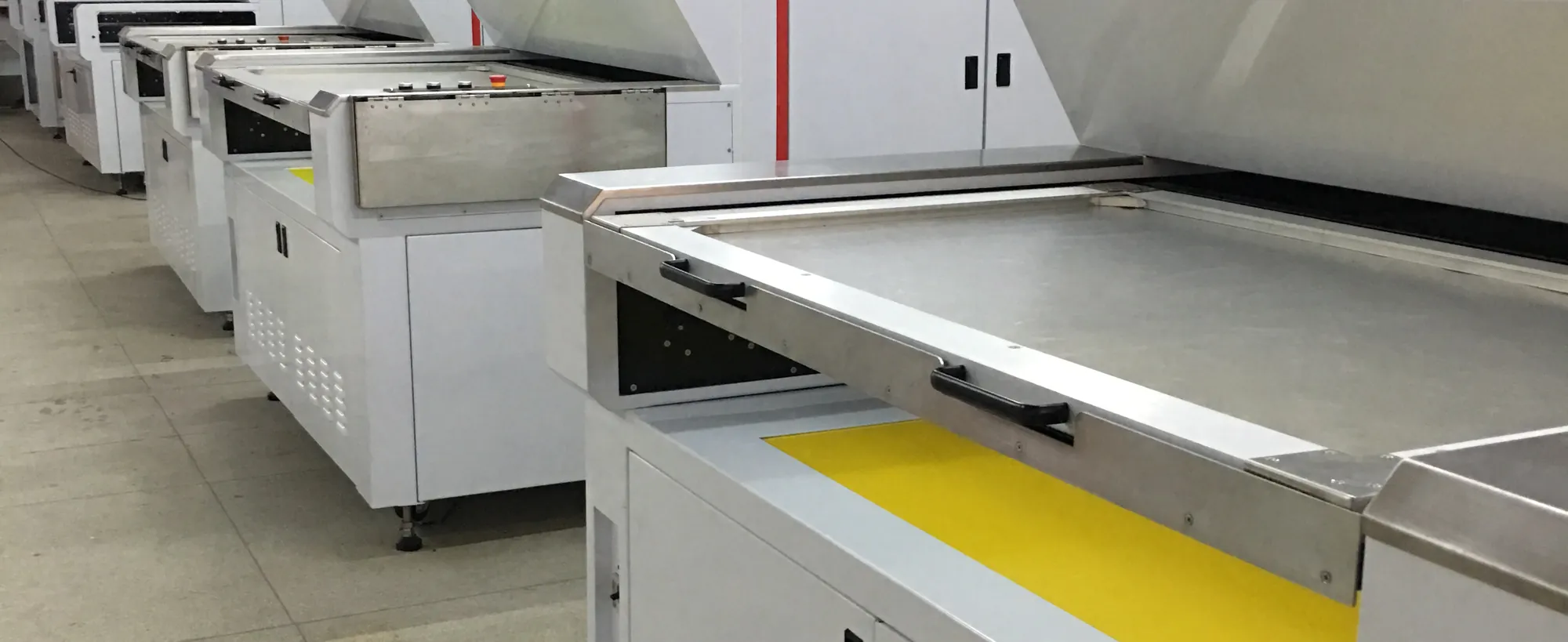
Laminator equipment inside the Leheng workshop
FPC · PCB · Metal etching

Dry film laminators,
LED exposure and UV curing

Built in Dongguan, China: 70+ models, 10+ patents of our own. Machines ship standalone or as a connected line, and custom work is built to your drawing. Before you commit, send your material — we will run it on the real machine.

70+Models on our data sheets
10+Patents, designed in-house
Since 2015Built in Dongguan, China
Products

Three core machines, plus the roll-to-roll handling around them

Lamination is the core process; exposure and curing set your resolution and yield; unwinding, rewinding and de-reeling decide whether the web runs straight. We build all four, which is why we can make them fit together.

Core machine LCSL-M25R roll-to-roll dry film laminator

Roll-to-roll dry film laminator

LCSL-M25R / RS

Single- or double-sided lamination in roll-to-roll mode, and sheet-to-roll as well. Independently controlled hot rollers; manual film-edge adjustment without stopping the run.

  • Web width250 – 650 mm (10" – 25.6")
  • Laminating speed0 – 4 m/min
  • Roller temperatureAmbient – 120 °C
  • PowerAC220V 8.5 kVA
Full specification
Exposure LED-1200X large-format LED exposure unit

Large-format LED exposure unit

LED-1200X / LED-1500X

Circuit and solder-mask versions, 1600W×2 up to 2000W×2 LED sources. Upper frame, lower frame and lamps set independently. Water-cooled lamps with chiller; forced-air cooled stage.

  • Exposure area1200×650 / 1500×650 mm
  • Uniformity≥ 90%
  • Vacuum-700 mmHg or better
  • PowerAC220V 5–6 kVA
Full specification
Curing Conveyor-type UV curing machine

Conveyor UV curing machine

LUVC-754M and 500 / 900 series

Three imported lamp sets, switchable between 80 and 120 W/cm. Extruded aluminium focusing reflectors with a mirror finish, over 30% more effective than conventional plates.

  • Effective width550 mm
  • Conveyor speedup to 10 m/min
  • Lamps3 × imported
  • PowerAC380V 43 kVA
Full specification

The same step, built two ways

Both sides in a single pass, or a stainless-steel build. Which one you need depends on your material and your plant. Neither of these is a rendering — both are running on customer lines.

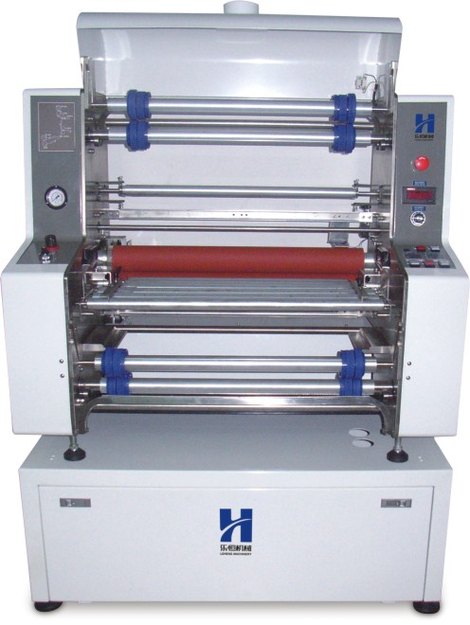
LCSL-R13D double-sided roll-to-roll laminator with the hood open, showing both heated rollers

Double-sided roll-to-roll laminator

LCSL-R13D

Two heated rollers face each other, so both sides are laminated in one pass — no second run, no re-registration. Each roller has its own temperature controller, the panel carries pressure gauges, and the hood lifts to leave the rollers and guides exposed.

  • Both sides in one pass — one load, one registration
  • Separate setpoint for the upper and lower roller
  • The hood lifts off, so rollers and guides can be cleaned and re-filmed without stripping the machine

Web width 250 – 1300 mm, heated rollers φ120 × 1460 mm, independent temperature control top and bottom, line speed 0 – 4.5 m/min.See the full R13D data →

Stainless-steel laminators installed in the yellow-lit cleanroom of an FPC plant in Shenzhen

Fully stainless-steel build

Built to the site requirement

The customer asked for stainless throughout — frame, hood and guards. The machines are installed in the yellow-lit cleanroom of an FPC plant in Shenzhen and wiped down with cleaning agents daily: no rust, no lifting paint.

  • No paint on the body, so nothing to chip into the process
  • Intended for FPC yellow rooms and cleanrooms where equipment is washed down often
  • Same structure as the standard machine; the material is the difference, not a separate design

Both units in the photograph are in production at an FPC plant in Shenzhen. Stainless builds are quoted per unit, with configuration and lead time confirmed separately.

Line handling equipment

LFJ-1600 dual-shaft unwinder with two air shafts and tension controllers

Unwinders

Electronic tension control with magnetic powder brake, adjustable 0–6 N·M. Keeps the web flat without slack. Splicing table included for joining rolls.

LFJ-1600 / LFJ-1700 / LFJ-700-2

LSJ-1600 dual-shaft rewinder with two air-expanding shafts

Rewinders

Servo edge guiding, 0–6 m/min. 3-inch air shafts, 100 kg shaft load; dual-shaft side-by-side or single-shaft full-width operation.

LSJ-1600 / LSJ-1700 / LSJ-700G

LSJ-550 vertical de-reeler with upright air shaft and control panel

De-reelers

Servo driven, pitch set on the HMI. Reversible rotation, 50 kg shaft load. Vertical format with manual loading.

LSJ-550 (dual shaft) / LSJ-450

HAF-5 PCB panel flattening press with control cabinet on the right

Ovens & panel flattening presses

Baking equipment matched to the laminating, exposure and curing sections; multi-zone models available. Board bow and twist after PCB profiling are taken out in the HAF-5 press — three openings, 200 °C.

LHO series / ASMO series / HAF-5 press / tunnel 12-5, 13 series

Specifications

Technical data

Full specifications for six representative models, taken from our official equipment data sheets. Parameters for other models in each series are available on request.

Roll-to-roll dry film laminator

LCSL-M25R / RS
Power supplyAC220V single phase, 50/60 Hz, 8.5 kVA
Overall dimensionsL1580 × W1190 × H1463 mm
SubstrateRoll diameter 80 – 250 mm; width 250 – 650 mm; thickness 0.05 – 0.3 mm
Dry filmWidth 250 – 650 mm; thickness 15 – 76 μm; roll length 500 ft / 1000 ft
Shaft sizeStandard 3 inch (75 mm)
Infeed sectionAluminium rollers φ31.5 mm, pitch 65 mm
Laminating sectionHot roller φ78.6 × 760 mm, 2 kW (aluminium alloy); speed 0 – 4 m/min, adjustable
Temperature controlAmbient – 120 °C, PID with SSR drive
Laminating pressurePneumatic, 2 – 5 kg/cm²
Outfeed sectionAluminium rollers φ31.5 mm, pitch 75 mm; fixed main body
Film edge controlManual edge adjustment, workable while running; no automatic edge guiding on this model (automatic guiding is fitted on R13D / R25D)
FeaturesSingle- or double-sided lamination in roll-to-roll mode, also sheet-to-roll; film edge correction adjustable during the run without stopping
OptionsInfeed dust-removal unit, wet lamination unit (optional, extra cost)

Roll-to-roll double-sided laminator (large roller)

LCSL-R13D
Power supplyAC220V single phase, 50/60 Hz, 8.5 kVA, 38 A
External dimensionsL1580 × W1890 × H1765 mm
SubstrateRoll diameter 3″ × φ250 mm; width 250 – 1300 mm; thickness 0.05 – 0.3 mm
Dry filmWidth 250 – 1300 mm; thickness 15 – 76 μm; roll 3″ × φ250 (approx. 200 m)
Core sizeStandard 3 inch (75 mm)
Infeed sectionAluminium rollers φ31.5 mm, pitch 65 mm
Edge guidingHeld within ±0.5 mm
Laminating sectionHeated rollers φ120 × 1460 mm, 4 kW each × 2 (aluminium alloy), upper and lower opposed
Line speed0 – 4.5 m/min, adjustable, digital readout in m/min
Roller temperatureAmbient – 120 °C, each roller independently controlled, IR sensor feedback
Temperature controlPID, SSR driven
Nip pressurePneumatic cylinders, 2 – 6 kg/cm² adjustable
Outfeed sectionAluminium rollers φ31.5 mm, pitch 75 mm
Rewind shaftStandard 3 inch (75 mm) air shaft, 6″ adaptor optional; max. load 50 kg
FeaturesDigital electronic tension control with edge guiding on unwind and rewind; independent tension control for the upper and lower film shafts; film-edge adjustment without stopping lamination; single- and double-sided dry film, roll in / roll out
OptionsWet lamination unit, dust-removal unit, length counter (extra cost)
SafetyEmergency stop
ApplicationLamination processes in FPC, metal etching and film converting

Large-roller dry film laminator

LCSL-M25D
Power supplyAC220V single phase, 50/60 Hz, 4 kVA
Overall dimensionsL1190 × W775 × H1235 mm
SubstrateLength 240 – 610 mm; width 250 – 640 mm; thickness 0.1 – 3.0 mm
Dry filmWidth 250 – 640 mm; thickness 15 – 76 μm; roll length 500 ft / 1000 ft
Infeed sectionAluminium rollers φ31.5 mm, pitch 65 mm
Laminating sectionHot roller φ120 × 760 mm, 2 kW (aluminium alloy); speed 0 – 4 m/min, adjustable
Temperature controlAmbient – 120 °C, PID with SSR drive
Laminating pressurePneumatic, 2 – 5 kg/cm²
Outfeed sectionAluminium rollers φ31.5 mm, pitch 75 mm; fixed main body, manual load/unload
Film edge controlManual edge adjustment, workable while running; no automatic edge guiding on this model (automatic guiding is fitted on R13D / R25D)
Featuresφ120 mm roller for thicker panels and higher bonding force; film edge correction without stopping

Large-format LED exposure unit (circuit)

LED-1200X
Power supplyAC220V single phase, 50/60 Hz, 5 kVA
Overall dimensionsW1730 (incl. 258 mm shelf) × L2400 × H1590 (incl. 110 mm castors) mm
Exposure area1200 × 650 mm (22" × 24", 2 panels)
Exposure stageMYLAR against glass, 2 sets, electromagnetic lock control
Lamps1600 W × 2 LED, special optical treatment for high parallel-light resolution
UniformityOver 90%
CoolingLamps: direct circulating water cooling with chiller; stage: forced air
ControlSmart HMI with exposure energy control, Chinese/English display, fault diagnostics
Vacuum-700 mmHg or better
Environment23 °C ±2 °C, humidity 55 – 60%; air supply 5 kgf/cm² or above; 40 L distilled water for the internal loop
FeaturesIndependent energy setting for upper frame, lower frame and lamps; low stage temperature; low energy consumption; faster than conventional exposure units

Conveyor-type UV drying unit

AUVC-754M
Power supplyAC380V three phase, 50 Hz, 43 kVA
ApplicationUV drying for PCB printing
Effective width550 mm
Overall dimensionsInfeed 800 + UV section 1200 + outfeed 440 = total length 2440 mm; width 1200 mm; height 2325 + 50 mm
ConveyorMesh surface 900 ± 50 mm above floor; mesh width 775 mm
Lamps3 × imported lamps, switchable 80 W/cm / 120 W/cm; arc length 625 mm, metal halide
ReflectorsExtruded aluminium focusing reflectors with special mirror coating, over 30% more effective than conventional plates
DriveWorm-gear motor, STS ribbed mesh with chain drive; up to 10 m/min, stepless electronic adjustment with digital display
CoolingForced air extraction, 2 × 12" exhaust ports; exhaust volume 60 CMM
SafetyEarth-leakage detection, over-temperature protection, motor overload protection for drive and blower, emergency stop, control circuit fuses

PCB panel flattening press

HAF-5
Power supplyAC380V three phase, 50 Hz, 21 kVA
ProcessFlattening of board bow and twist after PCB profiling; stress relief
Internal dimensionsW900 × D770 × H1050 mm
External dimensionsW1485 × D1080 × H2323 mm
Temperature rangeAmbient +25 – 200 °C
Pressing area3 openings, approx. 160 mm per layer, stack height max. 130 mm; effective pressing area 685 × 570 mm
ConstructionTwin-door design with the control cabinet on the right; SUS430 stainless interior, SS41 steel exterior rust-proofed and painted (60# light sand)
InsulationHigh-grade insulation wool, 80 mm, all six faces; heat-resistant silicone gasket, explosion-proof latches; low external surface temperature
Temperature controlOMRON E5A series (Japan), digital setting, LED display, SSR output; timer up to 9999 min, heat cut at time-out
Air circulationHorizontal forced circulation on both faces with dedicated air path; long-shaft oven motor, multi-blade fan wheels
SafetyOver-temperature cut-out, motor over-current protection, control circuit fuses, heater over-current protection, no-fuse breaker
OtherExternal air supply 5 kg/cm², consumption 4 L/min

Note: parameters above are taken from our equipment data sheets. Final delivery is governed by the technical agreement in the contract. Our full data sheets cover more than 70 models, including unwinders, rewinders, de-reelers, ovens, panel presses and tunnel furnaces — models not listed here are available on request.

Laminating rollers and web path detail

In lamination, the rollers and the tension decide your yield

Poor adhesion, wrinkles, trapped air, film drifting off the edge — trace any of them back and it usually lands in three places: is the temperature stable, is the tension even, has the web drifted. We deal with it in the machine structure instead of leaving it to the operator's feel.

  • Each roller controlled independently, with infrared sensors feeding back in real time
  • Automatic edge guiding within 0.5 mm (LCSL-R13D / R25D), stable even at 250 mm web width
  • Digital electronic tension on unwind and rewind, upper and lower film shafts controlled separately
  • Correct the film path while running, without breaking the production rhythm
Industries

Where these machines are used

Machine selection follows the process conditions, not the industry label. These are the four sets of conditions we build for most often.

01

FPC — flexible circuits

Roll-to-roll dry film application, exposure, and web handling before and after development. Thin material, narrow width and continuous roll in/roll out.

02

PCB — rigid boards

Film application, exposure and UV curing for both circuit and solder mask stages. Large-format exposure and thick-panel bonding are the common requirements.

03

Metal etching

Film application, exposure and curing on metal coils. Tension control and guiding accuracy directly determine line-width consistency after etching.

04

Thin-film & semiconductor supply chain

Precision lamination and exposure light sources for work outside the standard range, engineered to the customer's material and accuracy target rather than to a catalogue.

Deng Xiaonan, General Manager of Dongguan Leheng Machinery
Deng Xiaonan · General Manager "Believe that everything works out for the best."
About Leheng

A machine builder should think like its own customer

Dongguan Leheng Machinery Co., Ltd. has been building production equipment in Chang'an Town, Dongguan since 2015. We design and manufacture laminating machines, exposure units and UV curing equipment for PCB, FPC and metal-etching plants — plus the unwinders, rewinders and de-reelers that feed them.

Our data sheets cover more than seventy models, we hold 10+ patents of our own, and our machines run in production at PCB, FPC and metal-etching plants in China. Lamination and exposure light-source engineering is our own design.

We are not going to promise a perfect solution. What we will commit to: a real machine you can test with your own material, parameters that hold up at acceptance, and someone who answers when it stops running.

  • 1
    Drawings and patents in-house10+ patents; data sheets cover 70+ models, and non-standard duty is built to drawing.
  • 2
    Engineering, not a cataloguePrecision lamination and exposure light-source design matched to your material, width and accuracy target.
  • 3
    Trial runs with your materialSend your material to our workshop and run it on the real machine before you discuss price.

Workshop

Inside the workshop

These photographs are unedited. What the machines look like and how the workshop is run — judge for yourself. Except the two portrait shots further down: those were taken in a customer's yellow room.

In the field

These two were taken inside a customer's yellow room

Lamination and exposure both happen under yellow light. Dry film is ruined by white light, so the whole line has to stay in a yellow room.

Both photographs were taken after the machines were installed in the customer's plant — not of demo units in our own workshop. Yellow rooms have strict limits on dust, static and light, and each site's conditions are checked line by line before a machine goes in.

Leheng roll-to-roll laminator installed in a customer's yellow room
Customer yellow room · roll-to-roll laminator
Leheng LED exposure unit installed in a customer's yellow room
Customer yellow room · LED exposure unit
Running

The same machine, actually running

Unwind, lamination through the heated nip, rewind — all inside the customer's yellow room. The nip is where it shows: bubbles, edge wander, tension drift. Once the line runs, you see all of it within seconds.

No soundtrack. The room is loud anyway, and the picture is the point.

Customer yellow room · roll-to-roll laminator running, 20 sec
Customer yellow room · single-sided lamination, 58 sec
Single side

Single-sided, 58 seconds end to end

Shot on a customer line, single-sided. The camera starts close on the heated roller so you can see the film going down, then pulls back for the full run: unwind, into the nip, bond, rewind — start to finish.

No audio track. The extract fans in a yellow room drown everything else out, and the picture is the point.

Contact

Tell us the job, and the model number follows

Material, web width, film thickness, line speed, and the step you are stuck at. Send those five and you get a specific model, a price and a delivery window — not "anything will do".

Phone / WeChat
+86 137 2818 3880Same number on WeChat
Factory
4F, Building C, Aobo Science Park
No. 3 Jingyuan Road, Xiabian, Chang'an Town
Dongguan, Guangdong, China
Shipping
From Shenzhen / GuangzhouExport documents handled in-house; terms agreed per order. Tell us your plant supply — V, Hz and phase — when you enquire.
Visit the plant
Weekdays 8:00 – 17:30 (GMT+8)Call ahead and a machine will be set up with material ready. If you cannot travel, ask for a video of the trial run.